
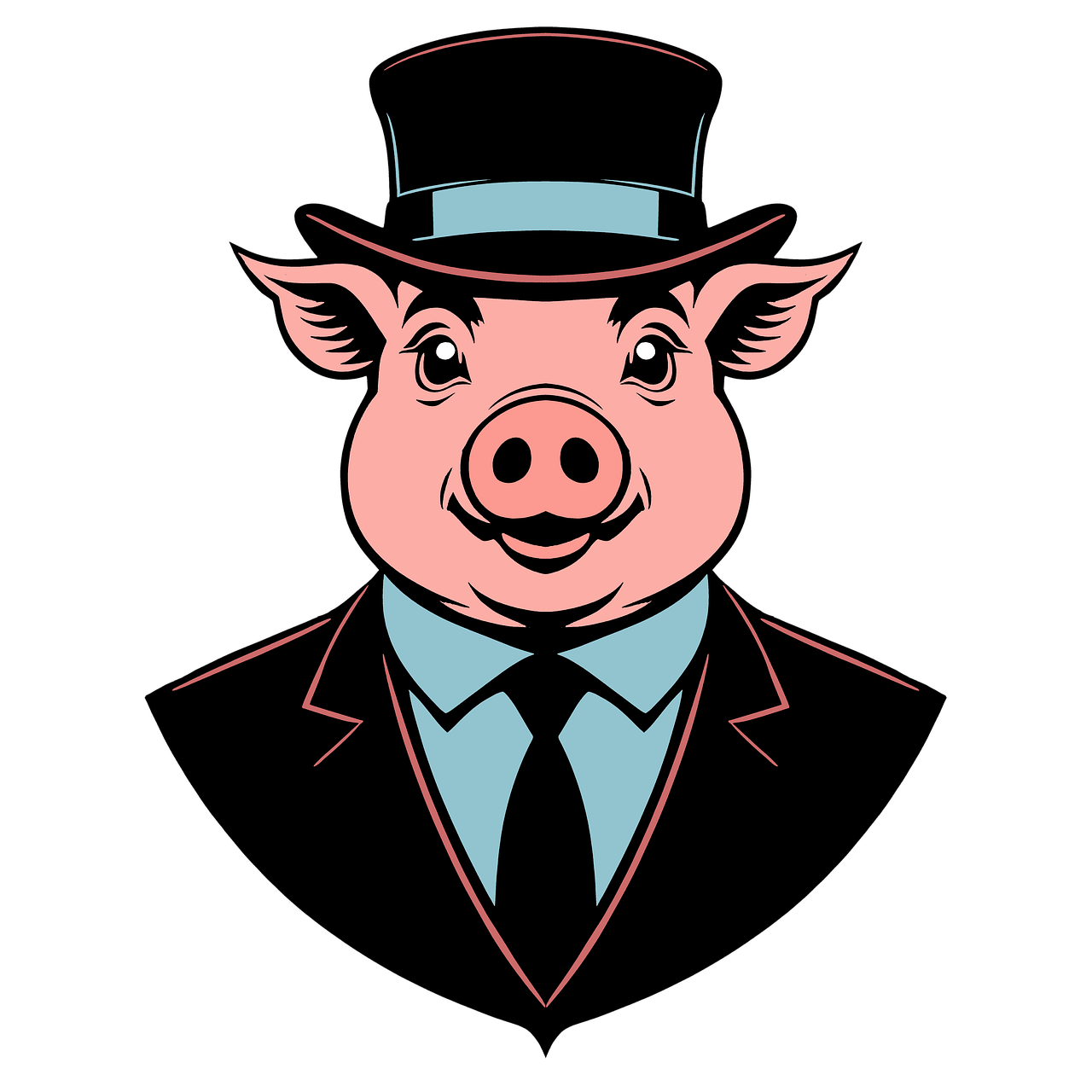
Animal Farm, written by George Orwell and published in 1946, is a dystopian fable that draws from the events and players in Russian Revolution to tell the story of a takeover of a farm by the animals who live there. At first, the animals take control from the humans in order to improve their lot in life. Why should the humans have comfortable beds and ample food and live in heated structures while the animals live in uncomfortable conditions? Over time, though, some animals take advantage of their newly gained power.
At first, the animals sincerely work to make a better life – they are a wonderful testament to the spirit of workers everywhere. They build a coalition to support each other and bring a sense of equality to their lives. Yet, drawing on the uglier side of human and animal nature, classes develop – with some animals benefitting at the expense of others. The idea that humans and then other animals exploit the “lower class” animals is sad but reflects the real plight of those on the lower rungs of the socio-economic ladder. Over time, those suffering start to forget that life could be better. While certainly not all those in positions of power take advantage of their positions, unfortunately there are people … or pigs in Animal Farm … who are greedy and who are willing to take advantage of those who less inclined to stand up for themselves. They believe they are superior and deserve more comfort, more luxury, more of the good things in life.
There always seem to be bullies who will use force and aggression to control and intimidate and get their own way. Tying the story to the Russian Revolution, we see Stalin emerge in the form of Napoleon the pig – it was frightening to see a tyrranical system take over the farm. As Napoleon ran Snowball (or, should I say. Trotsky) out of town and then smeared his reputation, I was frustrated and saddened. Even more frustrating was plight of the animals who were unable to realize what was happening – they couldn’t read or write, their memories were not very good (especially as they grew older), and they felt helpless to advance their own needs. They trusted their leaders, who were effectively betraying them.
As with Orwell’s 1984, the use and manipulation of language to sway others and to change the meaning of basic constructs was frightening. The animals’ seven commandments start off as one thing and become something else – e.g., no animals will sleep in beds becomes no animals will sleep in beds with sheets; no animal will kill another becomes no animal will kill another without cause. These subtle changes allow the pigs to live in luxury while fooling the other animals, whose conditions are deteriorating. This evolution of language and meaning confuses the animals who seem to vaguely recall agreeing to a different set of rules. As time goes on, the changes are greater: “four legs good, two legs bad” (the basic premise of the revolution to overthrow humans) becomes “four legs good, two legs better” when the pigs start to walk on two legs. And, of course, “all animals are equal” has an addition “… but some are more equal than others”.
As with 1984, rewriting and revising history is another way to exert control. The constantly shifting past makes the present and future unstable as well. The most telling is that at the end, when Napoleon boasts how he has benefited at the expense of the others – he has food while they starve, he “supervises” while they do the hard work, he lives in comfort while they freeze. Yet, he keeps telling them things used to be worse and they are better off now – and they believe they are better off. Then, the animals overhear him boasting to the farmers. What will the animals do? They finally hear that their conditions are worse than ever – will they stand up to Napoleon?
If Stalinist Russia is any indication, the followers of the may come to this realization too late. Stalin killed more than 20 million people – ground them under his feet, imprisoned them, starved them. In many ways, it’s more frightening than the dystopian world of 1984 because, on some level, it really happened. Two great books that describe scary versions of reality. Although I subjectively like 1984 a bit better, Animal Farm is a reminder that we sometimes need to stand up for ourselves and be a little less trusting of those who claim to represent us. We need to ask ourselves whether our leaders care about us and act in our interest or to benefit themselves. We need to remember that the animals in Animal Farm started out trusting their emergent animal leaders, until they learned they had been duped and exploited.

