
Lately, I’ve read a few articles and blog posts about the distinction between “younger” older people and “older” older people. This is interesting to me because, as I’ve been seeking out information over the past couple of years, it is apparent that a lot what’s out there doesn’t really apply to my mother. At a time when 40 is the new 30, I guess 70 may be the new 60 but I don’t know that 89 is the new 79. At some point, Mom caught up with her age.
With people living longer, we really have two generations in that older/senior/elderly mix – the boomer generation and their parents. It can be a bit annoying to look for information about activities for the elderly and see healthy 70 year olds smiling and cavorting with others – playing golf, dancing, going on trips, having romantic rendezvous, etc. At that age, Mom had an active social life with her friends, did a lot of reading, loved to drive and travel, was very engaged with her community, and on and on. Nineteen years later, it’s a different story.
Some people seem to be “born old” in that they are a stereotypically fussy, cranky older person well before they reach retirement age. Mom was not “born old” and even now only rarely fits that particular profile of an old lady. She worked full-time until she was 75 years old. She drove (alone) down to Baltimore from upstate New York until she was 80 years old, at which point she flew down to visit. When she was about 85, she seemed to age faster and moved in with me at 87. While she is quite healthy for 89, she is “old” now – she is physically more challenged, emotionally more fragile and intellectually more scattered. On good days, she jokes and follows stories on TV or in books and remembers things. On bad days, she is frail and confused and frightened.
I would like to see more options for “older” older people, but realize that this is a tall order. Having activities for people who may be ambivalent about meeting and hanging out with strangers – and because of memory loss, they may be strangers even if they have met before – is challenging in the best of times. Add to that the possibility of falling asleep in the middle of things, not being up to learning something new, not hearing very well and having different attention spans and it’s easy to understand why more activities are geared toward ages 65-80 instead of 80+.
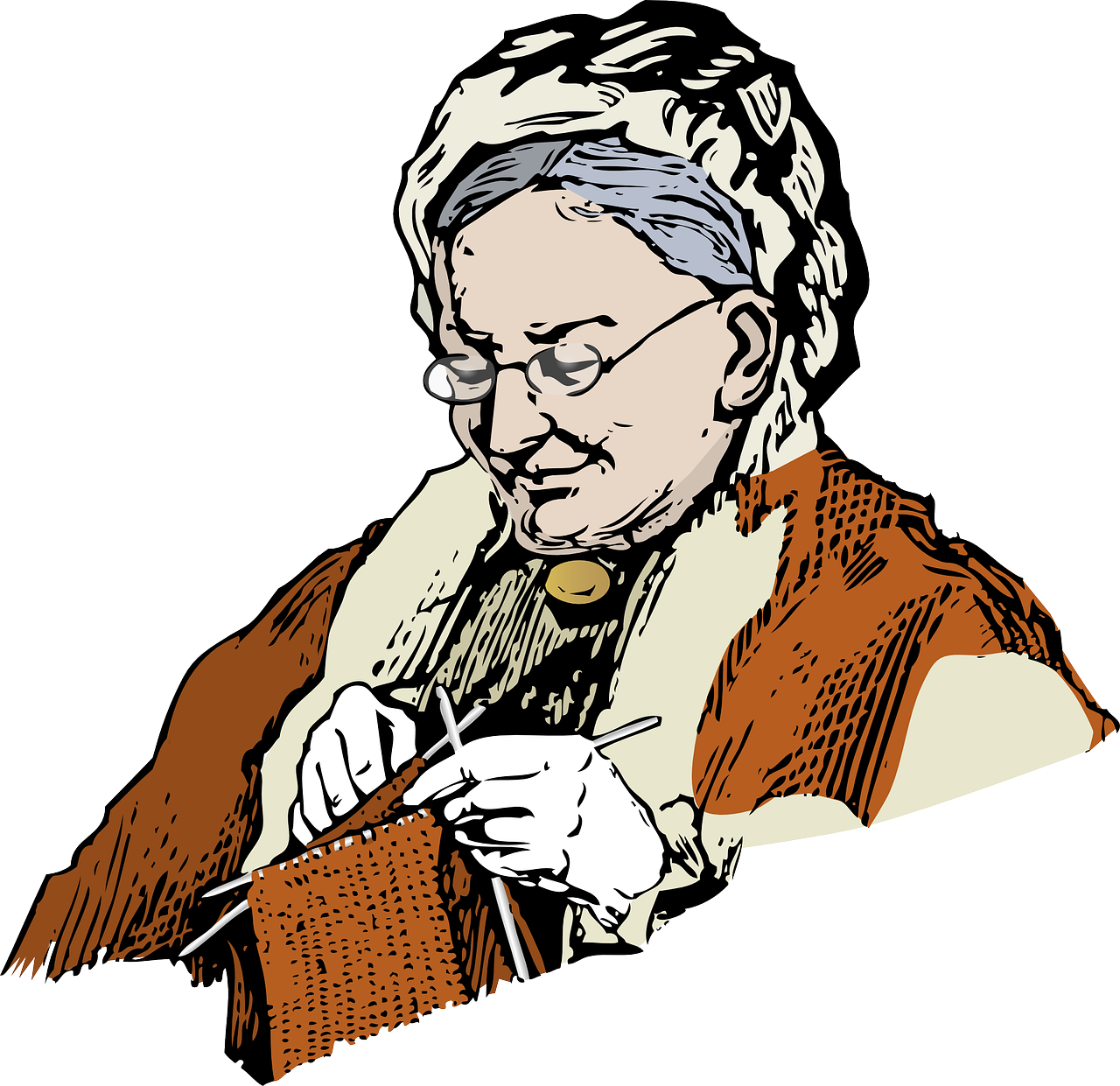
It’s hard to know how far to push Mom into new things because, while I want to challenge her to move out of her comfort zone a bit, there are just days when risk-taking is not a practical expectation. I think there is a fear of being embarrassed about falling asleep, not being able to hear very well (even with hearing aids) and not always understanding more recent reference points. Even though she loves to knit, I’m not sure she would feel comfortable in a group of knitters because she makes mistakes.
So, we work to keep life entertaining here at home. And, of course, working on building that network of people who can come to engage with Mom.


